

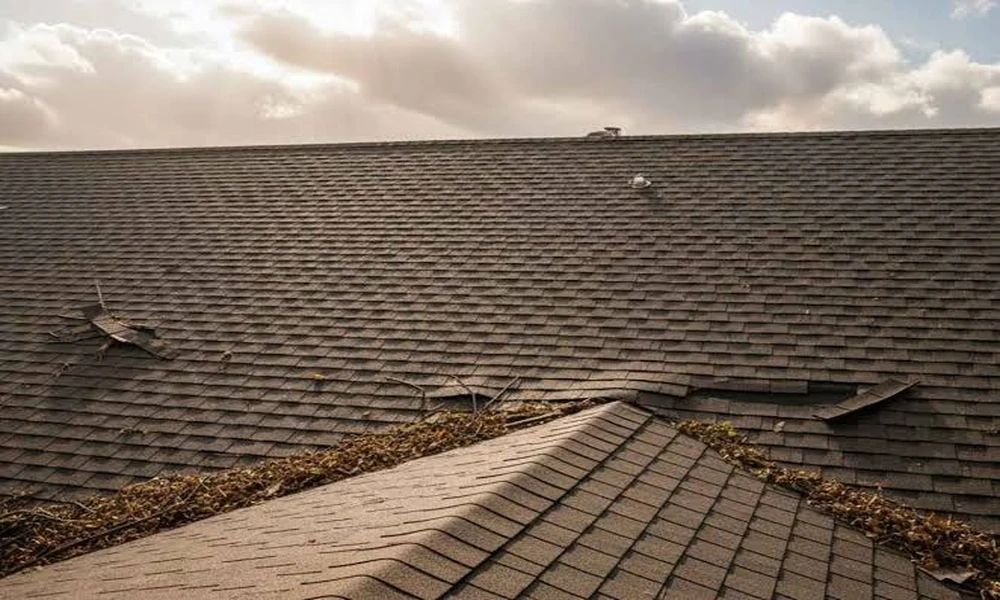
Most Knoxville homeowners picture roof trouble as an obvious disaster: a tree limb through the shingles, a waterfall from the ceiling during a downpour. The reality is slower and far more expensive. Seasonal storm stress accumulates invisibly, shaving years off a roof that looks perfectly fine from the driveway.
By the time the damage is obvious, the repair bill has already ballooned. Understanding how Tennessee’s weather stacks up against your roof, season by season, is the single most useful thing you can do for your home’s long-term value.
Tennessee Weather Hits Roofs From Every Direction
Knoxville sits in a genuinely punishing climate for roofing materials. The Appalachian foothills bring colder winters than most of the South, while spring and summer deliver the kind of severe storms more people associate with Oklahoma than East Tennessee. That combination means your roof doesn’t just age; it cycles.
Winter freeze-thaw cycles force water into tiny shingle cracks, then expand it into bigger ones. Spring tornadoes and supercell storms bring large hail and straight-line winds. Late summer thunderstorms pile on before the whole process starts over. Between 2015 and 2025, Tennessee recorded 18,988 individual storm events, causing combined property and crop damage estimated at $2.7 billion, with thunderstorm wind and hail ranking as the two most frequent event types, according to NOAA storm data compiled by PlainHazard.
That is not background noise. That is nearly 1,900 damaging events per year across the state, and Knox County sits right in the corridor that sees its share of all of them. The threat is not one big storm. It is the steady drumbeat of moderate events that nobody documents, nobody photographs, and nobody catches until a buyer’s inspector flags the damage during a home sale.
What “Roof Lifespan” Actually Means in This Climate
Manufacturers rate asphalt shingles at 25 to 30 years under standard conditions. Standard conditions are not East Tennessee. Heat cycling, UV exposure, humidity, and repeated hail impacts all accelerate granule loss, which is the protective coating that stands between your shingles and the elements.
Here’s the thing most roofers won’t volunteer: your roof’s functional lifespan and its warranty lifespan are two different numbers. A 30-year shingle installed in 2004 on a home that has absorbed three notable hail events and a decade of hot summers may have seven or eight years left, not fifteen. The warranty doesn’t know that. Only a physical inspection does.
“Hail risk is not just about one monster storm; it’s the cadence of frequent, smaller-scale events that can rapidly age and weaken a roof,” said Tory Farney, vice president of Verisk Weather Solutions, in a 2026 industry report on roof claim severity.
That cadence perfectly describes Knoxville. A storm that produces inch-wide hail barely makes the local news. It strips granules. It dimples the shingle mat. It creates microscopic entry points for water. Six months later, your attic has a damp smell you cannot locate. Two years later, the decking is soft.
The Real Cost of Waiting Too Long
Roof replacement costs have climbed sharply, and there is no sign of that reversing. According to the 2025 Verisk US Roof Report covered by Insurance Business Magazine, average residential roof replacement costs reached $17,631 in 2025, a 33% increase over the prior four-year average, while average repair costs hit $4,699, up 25% over the same period.
That number shifts dramatically depending on whether you catch damage early or late. A repair addressed at the right moment costs a fraction of a full replacement. A repair ignored for two years often turns into decking replacement, insulation replacement, and potentially interior remediation on top of a new roof.
The table below shows how storm impact compounds over time for a typical Knoxville asphalt shingle roof installed around 2007.
| Roof Age (Years) | Typical Condition Without Inspection | Likely Action Needed | Estimated Cost Range |
|---|---|---|---|
| 0 to 10 | Good; granules intact, flashing seated | Spot repair after major storms only | $300 to $1,200 |
| 11 to 17 | Moderate wear; granule thinning begins | Inspection, targeted repairs | $800 to $3,500 |
| 18 to 22 | Accelerated aging; hail pitting visible | Full inspection, likely partial or full replacement | $5,000 to $18,000+ |
| 23 and beyond | End of functional life; decking risk | Full replacement; interior damage assessment | $12,000 to $25,000+ |
Consider a homeowner on the north side of Knoxville who had their roof installed in 2006 and has never had a formal inspection. That roof is roughly 19 years old. It has survived the 2011 tornado outbreak season, repeated summer hail events, and the ice storms that periodically grip East Tennessee. It probably looks acceptable from the street. It is almost certainly in the third row of that table. Without an inspection this year, it will be in the fourth row within 24 months, and the cost difference between those two rows can exceed $7,000.
The STAR Inspection Framework: A Simple Annual Check
You don’t need to climb up there yourself. The STAR framework gives you a ground-level annual routine worth running every October before winter sets in.
- Shingles: From the ground with binoculars, look for curling edges, missing tabs, or color variation that suggests exposed mat material.
- Troughs: Check your gutters after the next rain for an unusual accumulation of sandy granules. Heavy granule loss in the gutters means the shingles are telling you something.
- Attic: On a sunny day, go up there and kill the light. Any daylight coming through the roof boards means gaps exist. While you’re up there, feel the decking for soft spots near the eaves.
- Roof perimeter: Walk the perimeter of your home and look at flashing around chimneys, skylights, and vents. Lifted or rusted flashing is almost always where water gets in first.
If any of the four checks raises a flag, stop DIYing and call a professional. This is one of the few home maintenance categories where guessing costs more than paying for expertise. That’s why experienced homeowners in the area tend to build relationships with Knoxville’s top residential roofers before a storm forces the call in a panic, when contractor availability is tight and pricing reflects the demand surge.
How to Work With Your Insurance After a Storm
Tennessee homeowners file a significant volume of storm-related roof claims every year. Many of those claims are underpaid simply because the homeowner documented damage too late or too informally. A few habits make a real difference.
Photograph your roof from the ground immediately after any significant hail or wind event, even if nothing looks obviously wrong. Date-stamped photos give an adjuster a clear timeline. Request a written inspection report from a licensed contractor before you allow an insurer’s adjuster to be the only one assessing the damage. The adjuster works for the insurer. The contractor works for you, and their documentation protects your claim.
Also check your policy’s claim window. Some policies require storm damage to be reported within one year of the event. Tennessee roofs absorb a lot of storms that homeowners shrug off and forget, and that pattern can quietly eliminate valid claims.
Choosing Materials That Work Harder Here
If you’re at the replacement stage, the material choice matters more in Knoxville than it would in a mild climate. Standard three-tab asphalt shingles are the budget option, and they are priced accordingly for a reason. Architectural (dimensional) shingles carry better wind ratings and shed water more effectively off their layered profile. Impact-resistant shingles, rated Class 4 by UL standards, are worth the premium in a hail-active region. Some Tennessee insurers discount premiums for Class 4 installations, which can offset a portion of the cost difference over time.
Metal roofing is the long-game option. The upfront cost is higher, but a properly installed standing seam metal roof in East Tennessee can last 50 years, meaning a homeowner installing one today will not face another replacement decision. That math is worth running before defaulting to the cheapest shingle tier available.
Your roof doesn’t announce its own decline. Tennessee weather makes sure of that. The most useful thing you can do right now is look up, run the STAR check, and decide whether the last time your roof was inspected was recent enough to trust.
