

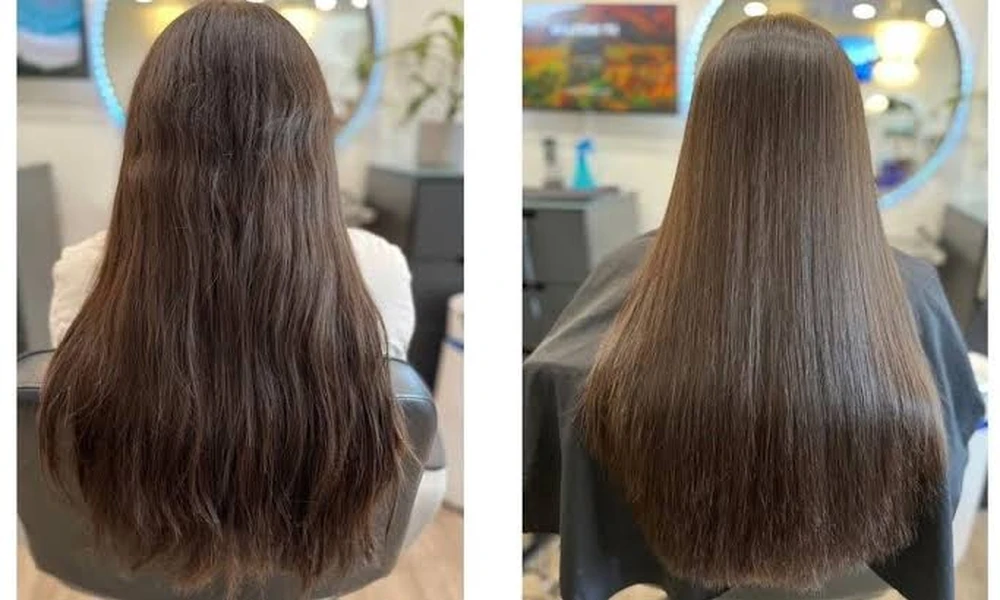
Every August, someone in a Montgomery County kitchen catches their reflection and wonders where the morning blowout went. Humidity slips into the hair shaft, the outer cuticle lifts, and strands that looked polished at breakfast swell into a soft halo by lunch. The instinct is to book “something to make it straight.” That phrase, though, covers at least four very different chemical processes, and picking the wrong one can mean months of flat roots, snapped ends, or a curl pattern you never actually wanted to give up.
A full salon menu tends to reveal just how many routes exist. At Jolie Spa, a Blue Bell salon on DeKalb Pike that has been working on local hair since 2000, the texturizing section alone moves from Keratin Complex and Brazilian Blowout, including its formaldehyde free BB Free version, through Magic Sleek and a full Japanese straightener, with permanent waves sitting at the opposite end. Seeing those options grouped on one page is a helpful reminder that the useful question is rarely which treatment is best. It is which one matches what your hair is doing right now and how long you are willing to live with the result.
Two Families of Chemistry Hiding Under One Word
Smoothing and straightening sound interchangeable, but they approach hair from opposite directions.
Smoothing treatments work on the surface and just beneath it. A stylist applies a solution built around proteins and conditioning agents, dries the hair, and then seals the formula in with a flat iron at high heat. The internal bonds that give hair its natural shape mostly stay intact. Frizz settles down, waves loosen, and the effect fades gradually over roughly three to five months as the coating washes away.
True straightening goes deeper. Thermal reconditioning, often called Japanese straightening, uses a reducing solution to break the disulfide bonds inside each strand. The hair is then rinsed, ironed into a straight shape, and neutralized so those bonds rebuild in their new position. Treated hair stays straight for good. Only the new growth at the root carries your natural texture.
That single difference decides almost everything that follows, from how regrowth looks to how forgiving the process is if you change your mind.
Why Keratin Style Treatments Became Everyone’s First Stop
The appeal of keratin and Brazilian style smoothing is that they relax hair rather than erase its personality. Blow drying time often drops dramatically, sometimes by half, and the hair holds a sleek finish through damp weather that used to undo it within an hour. Because the curl is softened rather than removed, many people with waves can still air dry into a looser, calmer version of their texture.
They tend to suit a few profiles particularly well.
- Thick, wavy hair that takes forty minutes and two brushes to blow out
- Curly hair that frizzes badly but whose owner still wants some body and movement
- Color treated hair that is in reasonably good condition and not heavily lightened
Regrowth is the other quiet advantage. As the treatment wears off, there is no harsh line between straight lengths and textured roots, just a slow return to normal. The tradeoff is upkeep. Most people find themselves rebooking a few times a year to keep the effect steady.
A Gentler Lane for Color Lovers
Newer smoothing systems have carved out a middle ground for clients who color often. Magic Sleek is one example, generally positioned as a formaldehyde free option that tames frizz and adds shine while being easier to pair with a color routine. The results are usually softer than a traditional keratin service. Hair looks smoother and more manageable rather than dramatically straighter.
For someone who books balayage or highlights every couple of months, that gentler approach can make more sense than chasing maximum straightness. The goal shifts from changing the hair’s shape to protecting the color investment and cutting down daily styling.
Japanese Straightening Behaves More Like a Haircut
If smoothing is a seasonal fix, thermal reconditioning is a long term decision. The appointment often runs several hours, and the outcome is sleek, glassy hair that stays straight without much effort. For very curly or coarse hair that resists every blow dryer, it can feel life changing.
It also asks for commitment. Roots need touching up every several months as natural texture grows in, and the straight lengths cannot be coaxed back into curls later. Hair that has been heavily bleached or previously relaxed may not tolerate the chemistry at all, which is why careful stylists insist on a strand test first. Anyone who imagines switching back to a curly look next year should think hard before choosing this route, because the only way out is growing it out.
The Fumes Question Deserves a Straight Answer
Hair smoothing has carried a safety conversation for more than a decade, and it is worth understanding rather than ignoring. Some formulas contain formaldehyde or ingredients that release it once heated by a flat iron. The U.S. Food and Drug Administration explains how these products release formaldehyde gas when heated and recommends that clients ask their salon exactly what is in the product being used.
In practice, that means looking for names such as formaldehyde, formalin, or methylene glycol on ingredient lists, asking whether a formaldehyde free version is available, and paying attention to how well the room is ventilated during the service. A good stylist will answer those questions without hesitation. Pregnant clients and anyone with asthma or chemical sensitivity should raise it at the consultation stage, before anything is mixed.
The First Few Days Decide How Long It Lasts
Aftercare is where many treatments quietly fail. Some older keratin formulas ask clients to skip washing for a couple of days and avoid clips, elastic bands, or tucking hair behind the ears so no dents set in. Many newer formulas allow washing within a day, so the instructions really do depend on the product your stylist uses. Japanese straightening typically comes with its own waiting period before the first shampoo while the bonds finish settling.
After that window, the rules become simple habits. Sulfate free shampoo slows fading. Chlorine and salt water strip treatments faster than almost anything else, so rinsing with fresh water after a swim helps. A silk or satin pillowcase reduces friction overnight. Heat styling is still allowed, though most people find they need far less of it.
Sometimes the Honest Answer Is Neither
Not every frizz problem is a texture problem. Hair that feels rough, looks dull, and snaps easily is often damaged rather than unruly, and sealing a chemical treatment over it can make breakage worse. In those cases, a few rounds of deep conditioning and a fresh trim may calm the frizz more than any smoothing formula could.
Curly hair deserves the same caution. A lot of curls look chaotic simply because they were cut wet and straight, the way straight hair is cut. A curl specific cut that shapes each ringlet as it naturally falls can transform how the hair behaves, no chemistry required.
The most useful thing anyone can bring to a consultation is honesty about their routine. How often do you actually style your hair? Do you love your curls on good days? Is your color schedule fixed? A stylist who hears those answers can steer you toward a treatment that fits your life, or talk you out of one that doesn’t, and either outcome beats waking up in October wishing you had chosen differently in July.
