

When your pet has ongoing sneezing, nasal discharge, noisy breathing, or nosebleeds, it can wear you down fast. You clean up the mess, watch them struggle to rest, and keep wondering whether this is a simple irritation or something deeper. If your veterinarian at Hamilton animal hospital has mentioned a rhinoscopy, you may already be bracing for bad news, a high bill, or a procedure that sounds more intense than it is.
A rhinoscopy is a way for a veterinary team to look inside your pet’s nasal passages with a small camera while your pet is under anesthesia. It helps find causes that X rays and a basic exam can miss, including inflammation, foreign material, polyps, fungal disease, and tumors. In many cases, it also allows the doctor to take samples or remove material during the same visit, which can shorten the path to answers and treatment.
Rhinoscopy gives your veterinarian a direct look inside the nasal passages
Your pet cannot explain whether the problem feels blocked, painful, itchy, or deep in the sinuses. That gap matters. A runny nose can come from infection, allergies, chronic inflammation, a blade of grass, a tooth root problem, or a growth hidden farther back. Symptoms often overlap, which is why treatment based on guesswork can drag on for weeks without much progress.
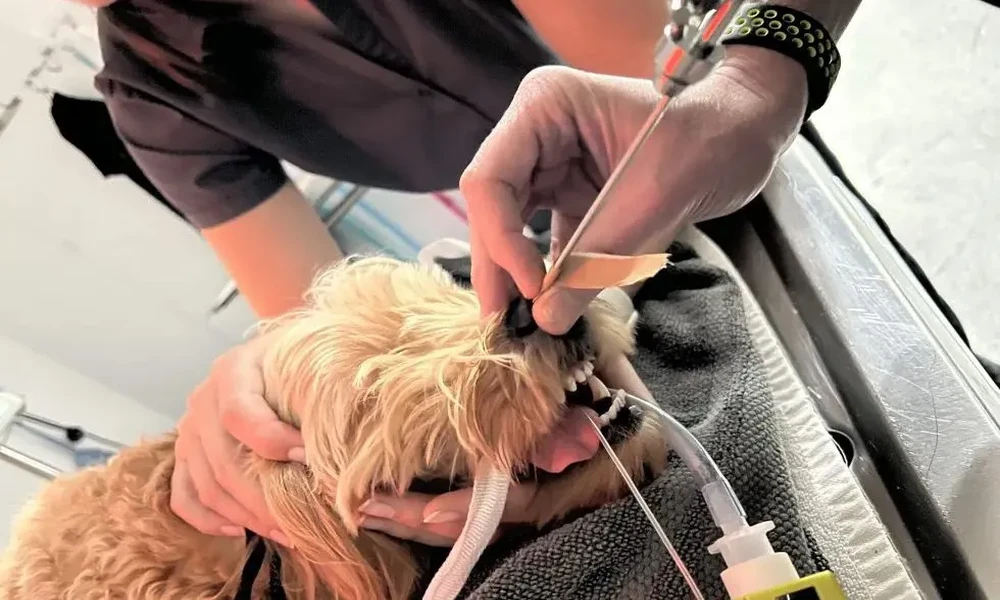
Pet rhinoscopy is an endoscopic procedure. Your veterinarian uses a thin scope with a light and camera to examine the front and back parts of the nasal cavity. Because the nasal passages are narrow and sensitive, pets are usually placed under general anesthesia so they stay still, breathe safely, and do not feel pain during the exam.
Before the procedure, your pet may need bloodwork, imaging, and a physical exam to confirm they are stable for anesthesia. Some hospitals also recommend advanced imaging such as CT before or around the same time as the scope, since imaging can show hidden changes in bone, soft tissue, and deeper structures. Teaching hospitals such as the University of Florida veterinary endoscopy service and specialty internal medicine teams like those at Cornell’s internal medicine service often combine these tools to get a clearer diagnosis.
During the exam, the veterinarian guides the scope through the nostrils and sometimes through the mouth to view the area behind the nose. If they see mucus, swelling, a foreign object, or abnormal tissue, they may flush the area, collect samples for culture, or take biopsies. If your dog inhaled a foxtail or your cat has a polyp tucked out of sight, that direct view can change the whole treatment plan in one day.
Delays in diagnosis can keep nasal disease going longer than it should
A lot of owners get stuck in the same loop. Antibiotics help for a few days, then the discharge comes back. Steroids reduce sneezing, then the congestion returns. You start wondering if you are overreacting, even though your pet still sounds stuffed up at night and leaves blood specks on the floor. That pattern is frustrating because the symptom improves, but the cause remains.
This is where a nasal endoscopy for pets can matter. It shifts the visit from treating signs to identifying what is driving them. If the issue is a fungal infection, the plan is very different from a lodged grass awn. If the problem is a tumor, early diagnosis gives you more time to discuss options. If the scope shows severe inflammation but no mass, that also gives useful direction and may spare your pet from more rounds of medication that were never going to fix the root problem.
There are practical concerns too. Anesthesia always deserves respect, especially in older pets or those with other medical issues. Cost can be a real strain. Biopsies, cultures, imaging, and specialist care add up. Even so, repeated visits, repeated medications, and weeks of uncertainty carry their own cost, both financial and emotional.
Rhinoscopy benefits and limits are easier to weigh side by side
| Consideration | Rhinoscopy at an animal hospital | Trial treatment without direct visualization |
|---|---|---|
| Main goal | Find the cause inside the nose and collect samples | Reduce symptoms based on the most likely cause |
| What it can detect | Foreign bodies, polyps, inflammation, fungal plaques, masses, bleeding sites | Cannot confirm the exact source |
| Anesthesia needed | Yes, in most cases | Usually no |
| Chance of getting a diagnosis sooner | High when combined with biopsy or culture | Lower, especially if symptoms return |
| Upfront cost | Higher | Lower at first |
| Long term efficiency | Can reduce repeated guesswork and delayed care | May lead to repeated visits and medicine changes |
Rhinoscopy procedure for pets is not perfect. Some conditions still need imaging, pathology, or follow up visits to fully define the problem. Swelling or bleeding can limit visibility. A biopsy can confirm disease that the camera alone cannot name. Even with those limits, it is one of the most direct tools available for chronic nasal signs.
Clear next steps help you prepare for your pet’s rhinoscopy
Ask what your veterinarian is trying to rule in or rule out. You want to know the working list of possibilities. Ask whether they suspect a foreign body, infection, chronic rhinitis, dental disease, or a mass. That gives context to the test and helps you understand why a scope is the next move.
Get a full estimate and ask what is included. A rhinoscopy bill may involve the exam, anesthesia, monitoring, imaging, biopsy, pathology, culture, and medications to go home. Ask what is standard and what may be added only if needed. That conversation lowers the chance of being blindsided later.
Prepare for aftercare before the appointment day. Most pets go home the same day, but they may be sleepy, congested, or have mild nasal discharge afterward. Ask about feeding, activity, pain control, and what signs mean you should call right away, such as heavy bleeding or trouble breathing.
Good answers often start with a closer look
If your pet has been dealing with stubborn nasal symptoms, your stress makes sense. A rhinoscopy sounds intimidating, but the goal is simple. Find what is inside the nose, stop guessing, and give your pet a treatment plan based on what is actually there. When you understand what happens during the procedure, the whole process feels less mysterious and a lot more manageable.
If your veterinarian has recommended a rhinoscopy, schedule a conversation about timing, cost, and what results may change next. Getting a direct look inside the nose is often the step that finally brings relief, for your pet and for you.
