

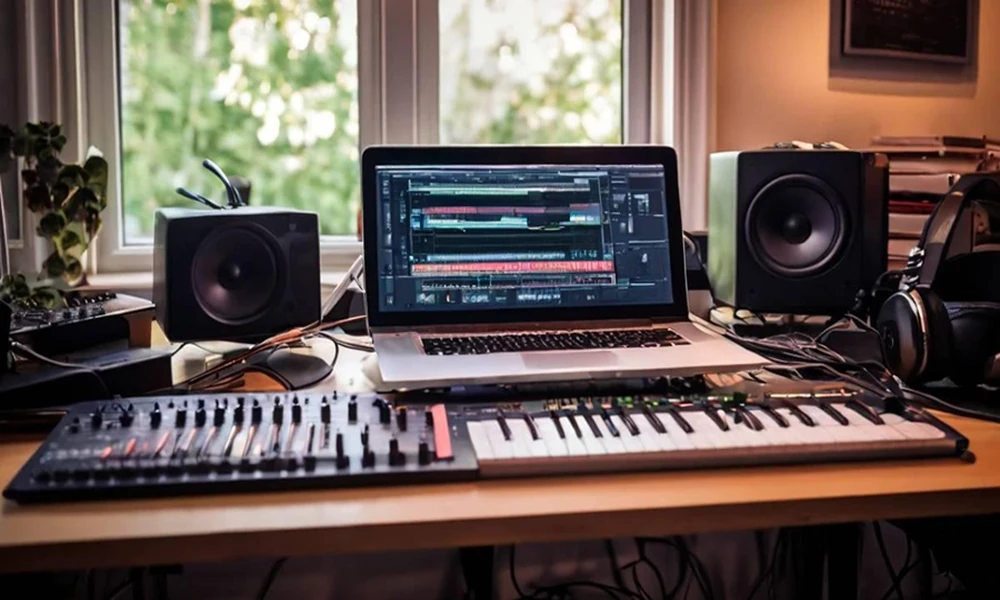
Starting a new music project is exciting. You find an interesting melody, build a drum pattern, and experiment with sounds until something clicks. But somewhere between that first creative spark and the final mix, progress slows down.
For many aspiring producers, finishing a track is harder than starting one. Projects accumulate, arrangements remain incomplete, and endless adjustments replace meaningful progress.
The problem is not always a lack of talent or expensive equipment. Often, a few unproductive habits prevent good musical ideas from becoming completed songs.
Understanding these habits can help you develop a more consistent production process and spend more time making music you are proud to share.
1. Starting New Projects Instead of Finishing Existing Ones
New ideas provide an immediate sense of excitement. Finishing a track, however, requires decisions about structure, sound selection, editing, and mixing.
When a project becomes challenging, starting another one can feel easier than solving the problem.
To break this cycle, choose one promising unfinished track and make it your priority. Set small completion goals, such as finishing the arrangement before adding new instruments.
You can still capture fresh ideas in separate sketches, but avoid turning every new idea into another major project.
Completing a track, even an imperfect one, helps you understand the entire production process.
2. Adding Too Many Sounds to the Arrangement
A crowded arrangement can make individual elements difficult to hear. Producers sometimes respond by adding even more instruments, hoping to make the music sound fuller.
However, an effective arrangement depends on how sounds work together, not simply how many are present.
Before adding another layer, ask yourself whether it serves a clear musical purpose.
Does it support the rhythm, reinforce the harmony, introduce contrast, or create an interesting transition?
If the answer is unclear, try removing it.
Pay attention to how instruments occupy different frequency ranges and rhythmic spaces. A simple bassline, focused drum pattern, and strong melodic idea can often communicate more clearly than numerous competing parts.
3. Mixing Before the Song Structure Is Complete
It is tempting to start adjusting equalizers, compressors, and effects as soon as a basic loop sounds good.
Although early sound shaping can support creativity, detailed mixing before completing the arrangement often leads to wasted effort.
Every new instrument or structural change may affect your previous mixing decisions.
Instead, establish the song’s main sections first.
Develop the introduction, verses, choruses, transitions, and ending where appropriate for your style.
Use temporary sounds when necessary and prioritize the musical direction.
Once the arrangement works from beginning to end, you can make better mixing decisions based on the complete track rather than a small repeating section.
4. Avoiding the Production Skills You Find Difficult
Every producer has strengths and weaknesses.
You might enjoy programming drums but struggle with recording vocals. Perhaps sound design comes naturally, while editing and arrangement feel confusing.
Avoiding these challenges can create recurring problems across multiple projects.
The solution is to identify the specific skill preventing you from moving forward.
If your recordings sound inconsistent, study microphone placement, recording levels, and room acoustics. If your tracks lack movement, focus on arrangement techniques and automation.
Structured learning can also help when independent experimentation stops producing useful progress. For example, music production short courses covering recording, digital audio workstations, and arrangement can provide focused instruction on individual production skills without requiring a full degree program.
The important principle is to connect what you learn directly to your existing projects.
Practicing a technique within your own music makes it easier to recognize when and why that technique is useful.
5. Using Plugins Without Understanding Their Purpose
Modern production software offers a remarkable range of creative tools.
However, having more plugins does not automatically produce better recordings.
Constantly switching between equalizers, compressors, synthesizers, and effects can distract you from the underlying musical problem.
Before inserting a plugin, identify what you want to change.
Are you trying to reduce unwanted low frequencies? Control sudden volume peaks? Create more space around a vocal?
Once you understand the objective, selecting an appropriate tool becomes easier.
Spend time learning the stock plugins included with your digital audio workstation. They provide opportunities to understand essential production concepts without continually purchasing or downloading additional software.
Better results usually come from intentional decisions rather than complicated processing chains.
6. Ignoring Reference Tracks and Critical Listening
Working on the same project for hours can make it difficult to judge the balance of your sounds objectively.
You become accustomed to certain frequencies, arrangement choices, and volume relationships, even when they are not serving the music.
Reference tracks can provide useful perspective.
Choose a professionally released song with a similar style, instrumentation, or production goal.
Compare elements such as vocal clarity, bass balance, stereo width, arrangement density, and overall energy.
Match playback loudness as closely as practical so that volume differences do not distort your judgment.
The goal is not to copy another producer’s creative decisions. Instead, use reference material to identify aspects of your track that may need attention.
Regular listening breaks also help you return to a project with a fresher perspective.
7. Waiting for Perfection Before Exporting a Track
Perfectionism can turn a nearly completed song into an endless editing project.
There is always another sound to replace, another transition to adjust, or another subtle mix change to consider.
Eventually, these changes may produce diminishing returns.
Establish a clear definition of what finished means for each project.
Your completion checklist might include a full arrangement, clean edits, balanced levels, intentional transitions, and an exported version that plays correctly.
Set a reasonable deadline and use the checklist to decide when the project is ready.
After exporting, listen on different playback systems and make corrections only when you identify a meaningful issue.
A completed track provides valuable experience and feedback that an indefinitely unfinished project cannot.
Conclusion
Finishing music consistently requires more than creative inspiration. It involves developing practical habits, understanding your tools, and making confident decisions throughout the production process.
By simplifying arrangements, addressing skill gaps, using references, and establishing clear completion goals, you can create a workflow that supports both creativity and progress.
Not every finished track needs to be your best work. Each completed project gives you an opportunity to evaluate your decisions, recognize improvements, and approach the next production with greater confidence.
The goal is not to eliminate every mistake. It is to keep learning while turning musical ideas into completed recordings.
